

Who Is Chris Allen?

Chris Allen is a multiple Grammy Award-winning recording, mixing, and mastering engineer based in New York City. With nearly three decades of experience, he has become one of the most sought-after engineers in jazz, working in some of the finest studios in the US. Allen served as chief engineer at Sear Sound, New York's oldest recording studio, for several years before going freelance. He is now based at Second Take Sound in Manhattan and works regularly at Power Station, Samurai Hotel Studios in Queens, and Esplanade Studios in New Orleans, a converted church he describes as "a spectacular place to record."

His credits span the contemporary jazz world and beyond: Joshua Redman, Chris Potter, Joe Lovano, Samara Joy, Kurt Elling, Kendrick Scott, Jonathan Blake, Steve Wilson, and many others. He has recorded extensively for labels including Blue Note, Decca, and ECM. Among his Grammy wins are Kurt Elling's Secrets Are the Best Stories (Best Jazz Vocal Album at the 63rd Annual Grammy Awards, 2021) and Samara Joy's Linger Awhile (Best Jazz Vocal Album and Best New Artist at the 65th Annual Grammy Awards, 2023).
A Request from Manfred Eicher

Allen's introduction to SCHOEPS came during a session for ECM Records. Legendary producer Manfred Eicher had booked Sear Sound to produce Joe Lovano's trio record Trio Tapestry, and his instructions were specific. "Manfred sent an email: 'We need SCHOEPS,'" Allen recalls. "We didn't have any at the time, so we rented two pairs. One went on the piano and one on Joe's gong setup."

It took about thirty minutes of soundchecking before Allen opened his laptop and started shopping for a pair of CMC 6 amplifiers. "That first experience absolutely blew me away," he says. "It was the most crystal-clear piano sound, but honest. Fully honest and warm. It captured everything about that piano that I'd always struggled to get. And on the gongs, the tone and transient response were just incredible."

Within two weeks of that session, Allen owned his first pair. He has used them on every record since. "It's no exaggeration," he says. "Every single recording I've done, they've been on."

A Drum Overhead Microphone That Needs No EQ

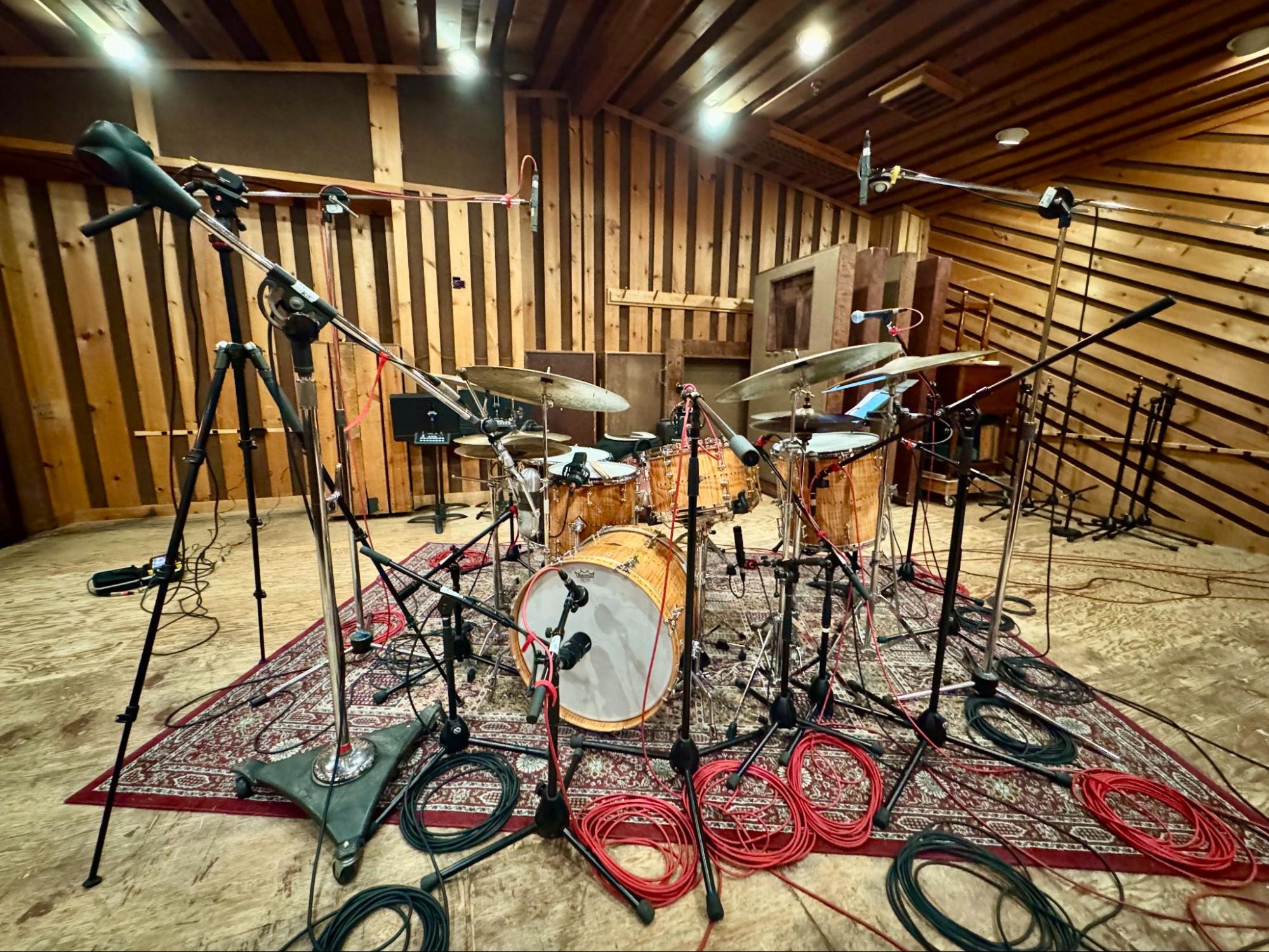
Allen's primary SCHOEPS configuration is the CMC 6 amplifier paired with the MK 4 cardioid capsule, and he reaches for it on every session. Ninety percent of the time, he uses the pair as drum overheads. They are the foundation of his drum sound.

"They capture so much of the attack, so much of the sizzle, and then also maintain a lot of tone and fullness in the cymbals," Allen explains. "They're the only cymbal mics I use that I don't have to EQ at all, which is always the goal. I'm honestly blown away by them every time."

When the session calls for it, the same microphones move to piano, room miking for strings, woodwinds, or small ensembles. "You name it, I've tried it, and I have never been disappointed," Allen says. "They've been amazing on everything."

Building the Foundation for the Jazz Drum Sound

In jazz recording, the cymbals drive the music. The ride pattern, the hi-hat pulse, the crashes and accents carry the musical energy forward, and Allen builds his entire drum sound around what the overheads capture. His approach reveals how much he trusts the accuracy of the SCHOEPS signal.

"The clarity and focus really need to be there and captured properly, because it's going to affect every decision I make underneath that when it comes to mixing," he says.

Allen positions the CMC 6 with MK 4 capsules close to the cymbals, aiming to capture as much of the stick articulation as possible. He balances the pair to center the snare drum, even though this sometimes pushes the bass drum off to one side. He also sometimes angles the capsules slightly away from the snare to manage bleed, since close microphones will capture the snare separately. "The whole drum set is really based around that honest, clean capture with the SCHOEPS," he says.

Above the overheads, he often places a second microphone for character, something warmer and more colored, like a tube condenser. But the SCHOEPS pair remains the anchor. "Knowing that I've got a very clean and honest capture is hugely important to me," Allen says.


Choosing Preamps for a Transparent Microphone

Because the SCHOEPS signal is so clean and transparent, Allen treats the preamp as the point where he introduces color to the sound. His choices shift depending on the artist, the instrument, and the tonal character he wants to achieve.

For the cleanest possible capture, he turns to the Avalon console preamps at Sear Sound or to Millennia and Grace Design outboard units. When he wants a blend of transparency and warmth, the Rupert Neve Designs Shelford preamps are a favorite pairing. "Very clean and 'Neve-y' at the same time," he says. "That's a really nice combination with the SCHOEPS." When a source sounds too harsh, he smooths it with a Tube-Tech MP 1A or Neve 1073. "I don't think you can go wrong on any instrument with the Avalon or Rupert Neve pairing," he adds.

The underlying logic is consistent: the microphone delivers a neutral, honest starting point, and the preamp shapes the final tone. It is a workflow that depends on the accuracy of the capture.

Pairing Microphones for Creative Choices

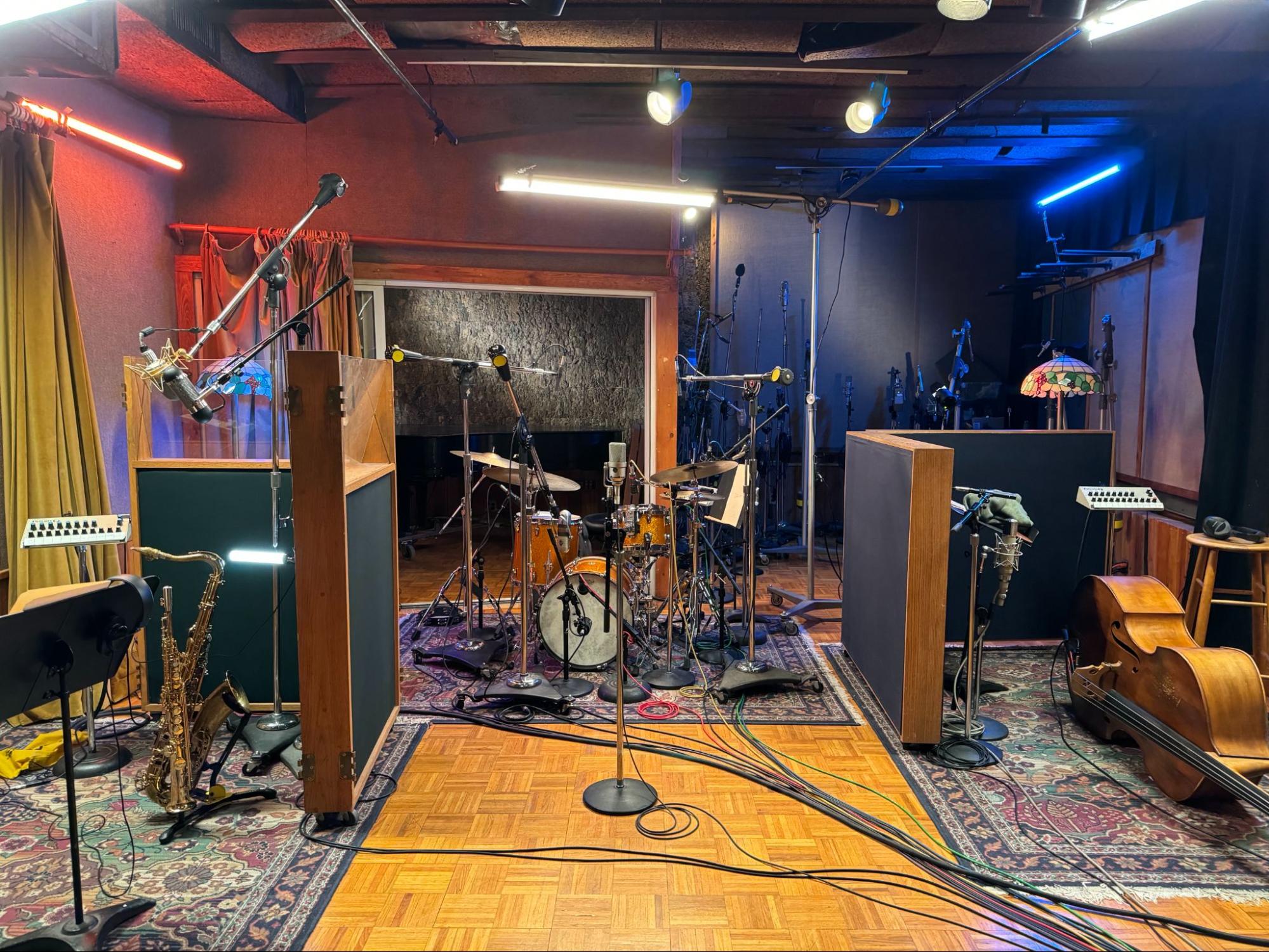
Allen's recording approach extends beyond drums. On soloists, he likes to pair a bright microphone with a dark one, typically a condenser alongside a ribbon, so that the mix stage offers a real choice of sonic character. On piano, he takes a similar approach: a clean pair on the outside of the instrument, often in NOS or ORTF configuration, complemented by tube microphones on the inside for warmth.

"When we're mixing, I have that flexibility to say 'we want it to be more honest' or 'we want it to be more fun,'" he explains. The SCHOEPS pair always serves as the transparent reference point in these setups.

A recent session at Power Station in Studio A for vocalist Stella Cole illustrates this approach in practice. Produced by Matt Pierson with arrangements by Alan Broadbent, the record It's Magic was released on Decca in August 2025. Allen used CMC 6 amplifiers with MK 4 capsules as drum overheads, a pair of CMC 6 with MK 5 capsules in cardioid on the piano, and another pair of CMC 6 with MK 5 in omni as room microphones for twelve string players, alongside a Decca tree and additional microphones. "When you write to Power Station and say 'give me all the SCHOEPS you've got,' that's my method there," Allen says with a laugh.


The Sound Behind the Sound of Jazz

Allen's work takes him through some of the most celebrated recording spaces in the United States. At Sear Sound, he recorded Joe Lovano's Trio Tapestry for ECM. At Power Station, he tracked Stella Cole's It's Magic for Decca and sessions for Blue Note. At Electrical Audio in Chicago, he recorded Kurt Elling's Wildflowers Vol. 3. At Esplanade Studios in New Orleans, he has captured Joshua Redman in a converted church with soaring acoustics.

One thing connects all these sessions: his SCHOEPS microphones. The cymbals shimmering on a Kendrick Scott record, the piano tone on a Kurt Elling date, the string warmth on a Stella Cole session: Allen captured them all with the same pair of CMC 6 amplifiers and MK 4 capsules, bought within two weeks of hearing them for the first time. His consistency of choice has quietly shaped the recorded sound of a generation of jazz musicians. For many of the most important jazz records released in the past decade, the first link in the signal chain has been the same: a SCHOEPS Colette microphone, placed with care, capturing every detail.


Featured Products